


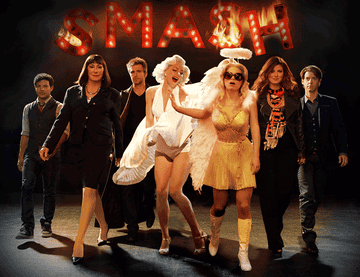
A year ago, Smash began its first season on NBC, critically praised and exceedingly hyped, with the well-funded backing of the network and its chairman, Robert Greenblatt, who considered the musical drama his pet project. Steven Spielberg had dreamed up the concept, and his DreamWorks TV was behind it.
But by the time the show had its finale in May, it had become an object of ritualistic ridicule: appointment television for hate-watchers, that new American sport created by social media. Smash's unsympathetic lead characters, oddly placed musical sequences, schizophrenic tonal shifts, cartoon-like villains who literally say, "You haven't heard the last of this," and strangely accessorized actors all became fodder for Twitter jokes. Comedian Julie Klausner even devoted a podcast to Smash, which she called "the best television of all time."
Along the way, Smash's creator/showrunner, Theresa Rebeck, was fired. Rebeck had made it clear that Smash was her vision, and when that vision turned out to be laughable, she was shown the door. Despite all of Smash's problems, it did well enough in the ratings to be renewed for a second season — it aired after hit The Voice, and benefited from that lead-in.
Now, new executive producer Joshua Safran, late of Gossip Girl, will attempt to turn Smash around in Season 2. It has a two-hour premiere on Tuesday.
How does a lovingly looked-after show with such high stakes for all involved become a joke? Smash is a case study: in how megalomania and television can clash unproductively; in how high expectations can crash immediately; and in how intense network and studio oversight can result in a paranoid show creator who causes workplace misery and, most importantly, a bad TV show.
NBC would not participate in this story. Instead, I spoke with more than a half-dozen people who worked on the first season — all of whom would talk to me only under the condition of anonymity out of fear of angering NBC, DreamWorks, and a number of other people — to try to figure out what went so horribly wrong with Smash.
Greenblatt began as the entertainment chairman at NBC in early 2011, after its parent company, NBC Universal, was taken over by Comcast. The network had been down so long, it had become a punch line. One bad season had followed another. After the Jay Leno/Conan O'Brien disaster, which played out in an ugly, public, embarrassing way the previous year, it seemed like the once-No. 1 network might never recover its good name, especially in the creative community.
Then the well-respected Greenblatt arrived. As an executive at Fox in the '90s, he'd had a hand in beloved series such as Party of Five and The X-Files; later, as an independent producer, HBO's Six Feet Under was one of his shows. Then, as the entertainment president at Showtime for six years, he turned the identity-less HBO imitator into a prestigious, growing pay-cable channel. NBC was lucky to get him.
In addition to his talents as a television executive, Greenblatt is a devoted theater geek. While at Showtime, he also produced a theatrical adaptation of 9 to 5 with Dolly Parton, which had a short Broadway run in 2009. Greenblatt originally bought Smash for Showtime in November 2009. It had been Spielberg's idea; the star director wanted to create a scripted series about a musical, and if all went well, the fictional musical would actually be developed as a real one on Broadway. It was an ambitious project.
When Greenblatt went to NBC, he brought Smash with him. Craig Zadan and Neil Meron, the producing team who specialize in musical theater adaptations for film and television, were already in place as executive producers; Marc Shaiman and Scott Wittman, Tony winners for Hairspray, were also on board to write Smash's original music. With Glee having so much success at Fox, the timing seemed perfect for a show for adults about the behind-the-scenes drama of making a Broadway musical.
Rebeck had been involved since Smash's inception as well. Though mainly known as an accomplished playwright, she had spent time in television too, writing for NYPD Blue, Law & Order: Criminal Intent, and other shows. For years, Rebeck had wanted to create a TV series about a Broadway production, and no one had ever bitten. Then she was hired to do exactly that on Smash. According to a story in Variety by Cynthia Littleton, it was Rebeck's off-Broadway play The Understudy, a backstage satire about how theater has been ruined by stunt-casting and celebrity, that sold Spielberg on her.
"It was pretty exciting when they came looking for me," Rebeck told Littleton.
Once Greenblatt got to NBC, Smash became a reality. The cast included a television star (Debra Messing), notable theater actors like Christian Borle and Megan Hilty (who had been in Greenblatt's 9 to 5), American Idol finalist Katharine McPhee for novelty, and an Oscar-winning movie star, Anjelica Huston. The pilot was filmed a few months after Greenblatt started his new job, for a reported $7.5 million. It was directed by Michael Mayer, who had won the Tony for Spring Awakening, but had never directed television before. At Greenblatt's first upfront presentation in May 2011, when the broadcast networks unveil their new shows to advertisers and the press, he announced that Smash would premiere in midseason and be paired with the second season of the surprise hit The Voice.
No work of popular fiction receives unanimous acclaim. But the pilot for Smash, sent out to journalists shortly after the up-fronts, got a ton of early love from critics, and deservedly so. It set up a world full of compelling characters. Messing and Borle played Julia and Tom, a successful team of songwriters who are also best friends; they begin to write a musical based on the life of Marilyn Monroe, providing the plot's engine. Hilty and McPhee were two very different ingénue characters — Hilty's Ivy was the seasoned actress/singer who had been in a thousand choruses and needs her big break, while McPhee's Karen was the naïve Iowa transplant just starting out. Eileen Rand (Huston) was a big-shot producer who has to show she can have a hit without her ex-husband/ex-business partner, and Jack Davenport played Derek, the star director who is also a sexual predator when it comes to casting. The music was a combination of pop covers (McPhee sang Christina Aguilera's "Beautiful" during an audition scene) and original songs, topped off by the catchy "Let Me Be Your Star," a duet and duel between Ivy and Karen as they both audition for the part of Marilyn in Tom and Julia's nascent musical. "Let Me Be Your Star" literally stops the show — as the song crescendos, the pilot ends on a cliff-hanger: Which actress will be Marilyn? It was exciting.
A show as complicated as Smash — with multiple musical numbers every week that needed to look and sound professional, in addition to the requirements of any television drama (an engaging plot and characters) — had to be run meticulously. Any television series can go off the rails if the showrunner loses control, or, conversely, controls too much — if his or her ideas turn out to be bad ones. A creator with aggressive convictions about what the show is or should be is not rare in television, nor is it necessarily a bad thing for a show that has so many non-writers in producing roles. The issues occur when that person creates a show with obvious, worsening problems and won't listen to anyone else — and that is what happened with Rebeck.
A source who worked on Season 1 of Smash said, "Very quickly it just turned into kind of like — a kingdom or something. A dictatorship."
And so, as Smash got going, it began to fall apart.
Rebeck had a full writing staff, some of whom she hired and some of whom were hired for her. One person who had happily taken a job behind-the-scenes based on the pilot and the premise said: "She was this kick-ass woman showrunner who wasn't taking shit from the network. Someone who had a very clear vision who was going to stand up to the network. They were all good things in the beginning. You know where this story's going!"
Rebeck would not speak with me for this article.
She had never been in charge of a television show before, so executive producer David Marshall Grant was tasked with helping Rebeck shepherd it day to day and to run the writers' room. Grant is a seasoned television writer — he was in charge of ABC's Brothers & Sisters in its final seasons — and a playwright; he also is a recognizable actor, having been a recurring character on Thirtysomething (he played one of Melissa Steadman's gay friends in a groundbreaking role) and, most notably, having originated the part of Joe Pitt in Tony Kushner's Angels in America. (He was nominated for a Tony Award.)
After a short time with her staff, Rebeck decided she wasn't interested in having a writers' room; at most, she wanted writers to do a first draft that she would then rewrite herself. That's not a crime, of course — show creators like Matthew Weiner, Aaron Sorkin, and Amy Sherman-Palladino surround themselves by writers who don't really write the episodes, but provide help in other ways.
Rebeck, though, didn't want to be surrounded. In a thorough, excellent preview story in New York magazine, Rebeck told Jesse Green, "Writers' rooms really are not my thing, because I can only stand being in a room with people so many hours a day. And I feel like early drafts should be speedy because everyone changes their mind, so why spend a lot of time up front parsing sentences?"
Her resentment toward Grant was palpable. "I don't think she ever relied on his skills in running a room," said one person who worked on Smash during its first season. "She'd never really dealt with that."
Another former Smash employee said: "I think Rebeck was worried that Grant was meant to be her replacement. This isn't completely paranoid, as networks and producers do this to showrunners all the time, but I don't think Grant is the type to do something so ruthlessly political." Grant, this source said, "was largely shut out from a lot of the writing process, as were all of the writers, but didn't lose patience until the end of the season, and even then he was discreet and professional about it."
"She really, really resented the idea that she was even going to need any experienced showrunner alongside her," said a third source. "And wouldn't let him have any impact, or be a partner, or help her with any of the diplomacy of dealing with the network. And it was sort of tragic. He had great ideas. He has an amazing energy and great people skills. And he was incredibly loyal — he hung in there until the bitter end, when anyone else would have packed their bags. It was so heartbreaking."
Reached by email, Grant declined to comment for this story.
Rebeck had written the pilot, and she wanted to write the next two episodes herself. Immediately, the show started going in a direction that the staff writers, NBC, and the many other executive producers — Zadan and Meron, and the two DreamWorks executives who were Spielberg's representatives, Justin Falvey and Darryl Frank — thought was the wrong one.
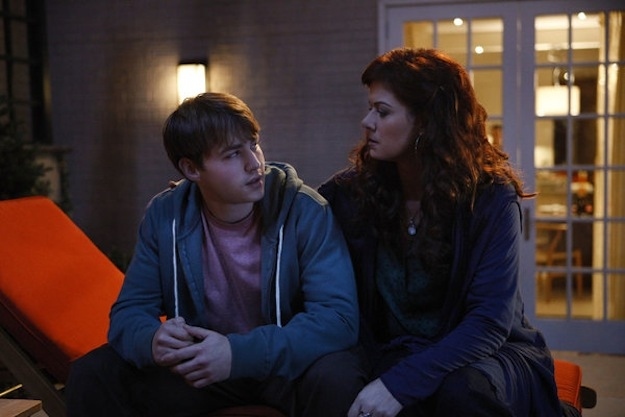
Specifically, the Messing character, Julia, became enmeshed in an adoption subplot that had been established in the pilot to create tension with her husband (Brian d'Arcy James), who wanted her not to work while they concentrate on getting a baby; Ellis (Jaime Cepero), the scheming assistant of Tom, began to evolve into a main character, always lurking in the background and plotting something (by the season's end, he literally poisoned someone); Leo (Emory Cohen), Julia's sullen teenage son, also started to have an odd prominence; and the insertion of the non-Marilyn-related musical numbers were awkward and inorganic.
One source summarized the last issue succinctly: "The problems with the show became clear to me when I watched a cut of the third episode, Karen's karaoke scene specifically. It was very poorly executed and unrealistic."
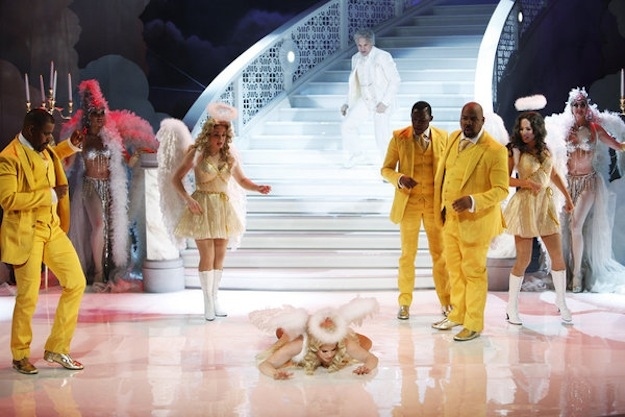
In that scene, Karen has gone home to Iowa to visit her parents and ends up winning over a crowd — not the first time, and not the last time — by bursting into song ("Redneck Woman," in this case). As the season unfolded, there were many unintentionally funny musical set pieces: Karen and a wasted, humiliated Ivy come across street musicians and sing "Cheers (Drink to That)" by Rihanna; Karen gets a job singing at a Bar Mitzvah and doesn't know "Hava Nagila" but triumphs by singing Florence + The Machine's "Shake It Out"; Ivy fantasizes about breaking away from her hard-luck life while singing "Break Away" by Kelly Clarkson; Karen imagines her boyfriend, Dev (Raza Jaffrey), in an elaborately staged Bollywood number; and many more.
All of these scenes would eventually be jeered at by the viewers who loved to hate Smash. Even before the show debuted, though, hordes of staff members tried to raise their concerns.
Take the Karen/Bar Mitzvah scene, for instance. "The original idea was she goes, she doesn't know what the hell she's doing, she's never met a Jew, she doesn't know anything," said a source who worked on that episode. "The joke was going to be on her. It was going to be kind of a disaster, but she was going to come out kind of ahead because somebody liked her voice. But they wouldn't let us have her at all be even a comic disaster. She's triumphant! There's no conflict there."
Another source added: "It wasn't comic, wasn't funny, wasn't interesting, wasn't complicated."
Lack of complexity in the characters and in the obstacles they faced turned out to be Smash's worst — or best, if you were watching it as an accidental comedy — attribute. Ellis, the bisexual, homicidal villain, and Leo, the whiny stoner son, became absurd.
So how in the world did, say, Ellis happen? It's a surprising answer.
"Spielberg loved the Ellis character," said one source. And the actor? "Everyone wanted to recast him except for Theresa."
And even more surprising, another source said that after the pilot was shot, "Spielberg's big push was to recast Megan Hilty" — who was unquestionably one of the only true, unironic bright spots of Smash. In the messy panic of preventing that mistake, especially one dictated by the Oz-like Spielberg himself, "there was so much discussion about Megan Hilty that Ellis just got on the show," said the source. "They loved the character, and Theresa kept writing him."
As for Leo, auditions were held to recast Cohen. But in the end, he kept the part. And anyway, it's hard to know whether the one-dimensional, farcical qualities to both Leo and Ellis were the actors' faults: A source blames the absence of a writers' room. "On many occasions, writers working independently would write character beats that had already been done, almost identically, in a previous episode, which is a surefire way to make a character look like a joke or a cliché," said this person. "Arguably this should have been caught by Rebeck or the actors or the executives, but for whatever reason it never was."
Neither character will be back in Season 2. I requested comments from Cohen through his manager, who wrote back, "He is not comfortable talking about Smash as his focus now is his feature film career." Cepero's publicist got back to me, but did not comment.
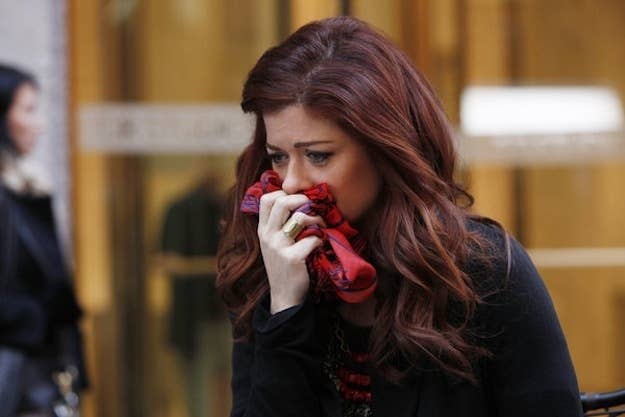
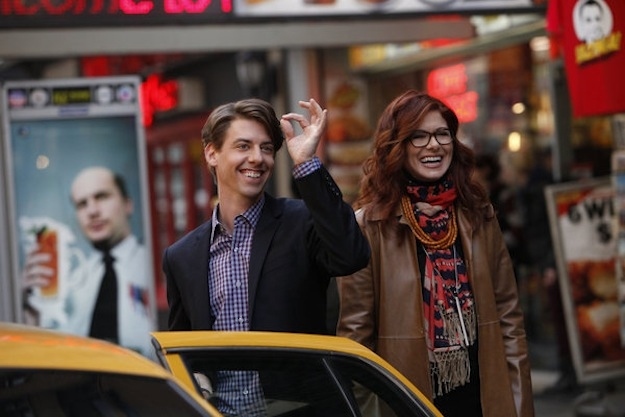
Preposterous side characters are one thing. But Julia — who started out as Smash's star — also fell into caricature. Messing's wardrobe, with a focus on her scarves, became a meme — the parody Twitter account of the Julia character lists "Scarf Aficionada" in the bio. But Julia faced bigger bumps than her unflattering clothing; Rebeck based the character on herself, and yet wouldn't allow Julia to have a good arc that would satisfy or endear her to the audience.
If the writers wanted to give Julia something to do that was hard and that she would eventually get through, "Theresa would say, 'It's not a struggle! She doesn't have a problem! She's the hero! She saves everything!'" said someone who witnessed this oft-repeated discussion.
Another source added: "The writer had such a strong identification with that character that she couldn't actually write well for her, or allow interesting stories to develop. The writers were trying to push into more interesting territory for that character, and Theresa blocked that creatively. Even if she might think, Well, I wanted Debra Messing to be the star, she didn't allow that to happen."
If the adoption storyline played out in a ludicrous way, no one could do anything about it, since it was based on Rebeck's life. "Even the network knew not to mess with that. Because it was very loaded."
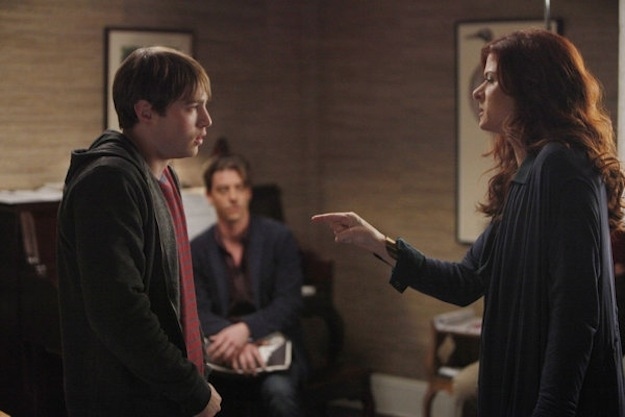
The Smash office was not a happy place. Rebeck fought with everyone: her writers, Greenblatt, Falvey and Frank, Zadan and Meron, Shaiman and Wittman.
"She was prone to screaming," said one person. "She would crow about her fights. She sees herself as a victim. It is common for a showrunner to feel victimized — she's not the first. She would retell a lot of the fights, and it was a little tricky to know who was to blame.
"In this case, I think everyone was to blame," this person continued. "I don't think anyone in last year's story comes out looking great except, I would say, David Marshall. He was the one who was totally blameless in this scenario."
One source, who still likes Rebeck personally, said, "For all of her mistakes as showrunner, and there were a few big ones, she was working under impossible conditions."
Every television show has a network and a studio, and, except in rare cases of creative freedom (HBO is known to leave its creators alone), the showrunner has to listen to both. Smash had — and has — many people chiming in.
"In this show's case, it's not only the network," said one person. "You have the network, you have DreamWorks, you have Neil and Craig, you have Mark and Scott. It's an insane menagerie."
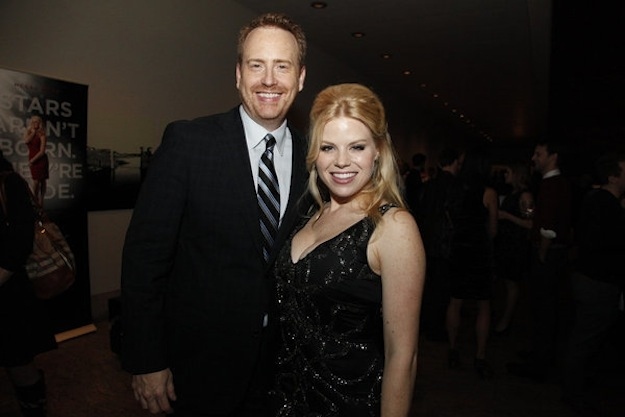
Since Smash was Greenblatt's baby, he "gave even minor production decisions a great deal of attention," said a source. Another person who worked on the production side said he would weigh in on things as tiny as fabric swatches for the Marilyn costume, and he would have conference calls about how the dailies — the footage shot each day — were going. On the other hand, added this source, he had "all great suggestions." He personally oversaw the numerous reshoots.
Other people I spoke with echoed that sentiment — that they would pray Greenblatt would stop Rebeck. "You know it's bad when our last hope was the network," said one. "She would come up with these horrible ideas; she wouldn't hear it from us, so we were in the upside-down world where the network was the sane one."
But among all these high-up people, there were conflicting agendas.
Zadan and Meron were non-writing producers there to lure talent to the show like Uma Thurman, who did a Season 1 arc as a movie star who ends up playing Marilyn for awhile, leapfrogging over Ivy and Karen. They were also supposed to serve a diplomatic purpose. One person said: "They were the ones who were supposed to be middlemen for a lot of the shenanigans that were going on. Especially in the case of Theresa Rebeck, who had no people skills, and no desire to smooth things over with anyone, they of course clashed horribly."
That person continued: "They play all sides of the game. We've seen them stab everyone in the back depending on who's in the room at the time. And what their agenda is at that moment. They work for themselves."
Zadan and Meron declined to comment.
The DreamWorks guys, Falvey and Frank, were there to be Spielberg's representatives, but ended up shielding him from how bad things were getting.
"They're sort of company guys," said a source who witnessed this dynamic. "He was unaware of a lot of the drama for a long time, Spielberg — and they kind of wanted to protect him from the mess." The source adds: "They had backdoor deals with the network people — like, we'll take this battle, you take that battle, we'll be the good cop on this, you be the good cop on that. Everybody was spinning around as the money was spent." (As reported by Variety, Smash's price tag per episode was an expensive $3.5 million.)
Through a representative, the DreamWorks team declined to comment.
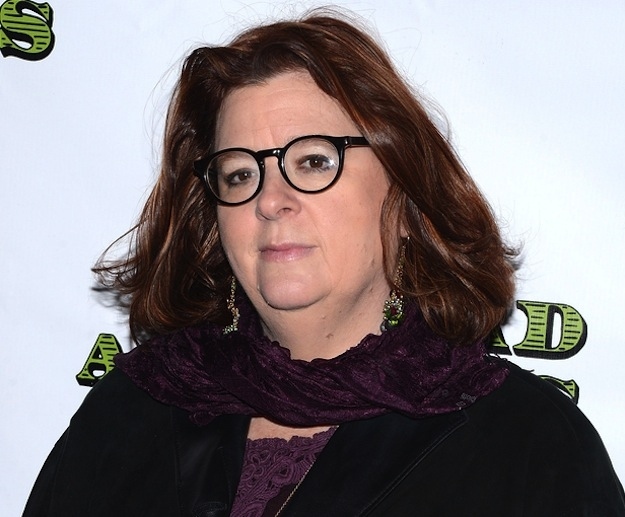
The work environment was toxic, the show wasn't good, and everyone was worn down. In the one interview in which she has discussed her Smash experience, Rebeck told The New York Observer in November, "One of the points of contention last year was that the network thinks they have the right to say to the writer of the show, 'We don't want her to do this. We want her to do this.'" She also said: "The better executives understand that there's supposed to be tension and respect, but a lot of them are just like 'Do it. You don't own it. Just do it.' That's not a level playing field; you can't have a true discussion."
If there's anything everyone agrees on, it is that yes, there were no true discussions — and in the end, Rebeck fought everyone off. "The crazy thing that happened was because she was such a terror to them, she actually kind of bought herself a certain amount of autonomy," says a source. "They kept barraging her with notes and demands, and she was a Mack Truck: She would not take it. Nobody wanted to deal with her to the point that Bob didn't want to deal with her!"
Rebeck's last champion was Spielberg. "But obviously even that went away."
Smash's ratings were OK; on another network, they would not be, but NBC is in a weak position. If you discount its inflated premiere, which was heavily promoted during the Super Bowl, Smash's Live+7 audience (meaning, people who watch a show within seven days of its airing) was a decent 8.9 million viewers, according to Nielsen Media Research. It was a given that it would be renewed. Hours after that happened last March, Deadline broke the news that Rebeck would "depart" because she was "stepping down." In fact, Greenblatt had fired her.
"From everything I heard, it was like the assassination in Julius Caesar — silence from the conspirators, then a sudden firing," said a source. "I don't think it was handled with much kindness or grace."
Another source put it differently. "Let's just say it was a great day, and I'll remember it for the rest of my life."
When I emailed with Theresa Rebeck to ask her to talk with me, she wrote, "Listen, Kate, I was told to keep my mouth shut because it was in fact an explosive situation, and I was treated quite badly." She wanted to make sure no one from NBC had spoken with me — which no one had — and when I assured her of that, but reiterated I would like to hear her side since many other people said unflattering things about her, she did not respond again.


View this video on YouTube
Jeremy Jordan, one of the new stars of Smash.
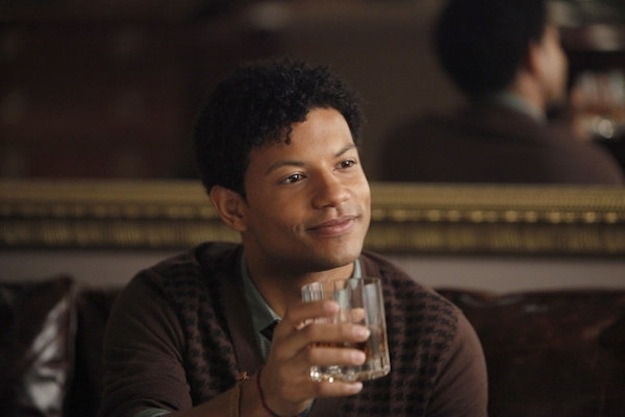
If you were a Smash viewer, how you'll feel about the rebooted show depends on why you liked it in the first place. If you enjoyed its forehead-slapping journeys into John Waters–adjacent territory, you will probably be sad. NBC sent out the first three hours (the two-hour Monday premiere and the Feb. 12 episode) of Season 2, and Smash has stabilized. Safran, the new showrunner, and an almost all-new writing staff, have ditched the problematic characters (Leo and Ellis aren't alone in the trash heap; Dev is also gone; and Julia's husband, Frank, isn't around long either), and there are new ones (played by musical theater performers Jeremy Jordan and Andy Mientus) who aren't silly. A second musical is added to the plot — one that brings the original music and pop culture references out of Marilyn Monroe's 1950s America to, if not today's Book of Mormon world, at least to Jonathan Larson's Rent era. The first hour closes with Jordan's character singing a terrific song called "Broadway, Here I Come," written by composer/lyricist/performer Joe Iconis.
At a press conference for Smash in early January, Safran was diplomatic about the first season. He repeatedly said things like, "I don't really think it's changed that much," which is not actually true, but the official NBC stance seems to be to act like not much was wrong and there just needed to be a few adjustments. At one point, Meron, who was also on the panel, was asked about replacing Rebeck, and he said: "She always had plays going, and her focus was very, very much taken up by a lot of her other loves, which included the theater. And so it was a decision that just came down the pike." In a separate press conference that same day, Greenblatt expressed worry that Smash would no longer have The Voice as a lead-in — it will follow the sinking comedy hour of Go On and The New Normal — but called Season 1 an "unqualified success." When Hitfix's Alan Sepinwall pressed Greenblatt about why he would use those words after having gotten rid of Rebeck, he said, "No, I can't qualify 'unqualified success.' I mean, it's one of our highest rated shows."
According to sources, even without Rebeck there, the reshoots and tinkering continue.
There is a funny, self-referential recurring plot device in the premiere, which is that the Marilyn musical, having had its out-of-town tryout in Boston at the end of the first season, is well on its way to being launched on Broadway — except that its story, as written by Julia, Rebeck's alter ego, is bad. As worded by the fictional version of the New York Post's real-life theater columnist, Michael Riedel, who, oddly, has become an occasional character on the show, "In her unfocused hands, what should be a peek behind the curtain becomes an inch-thin picture show."
After claiming several times that she hadn't read any reviews, Julia breaks down to Tom and tells him that she had on opening night. "I pretended that I didn't because I was so mortified. Everything I've done has turned out so wrong," she says, crying and terrified.
"What if I can't fix it?"