

"You rescue girls from brothels?" Meg Ryan asks a Cambodian activist in Half the Sky, a documentary based on the work of Nicholas Kristof and his wife Sheryl WuDunn in 10 developing countries. This idea of "rescue" is at the heart of a growing critique of Kristof's journalism and activism from a variety of journalists and activists, and in some cases from sex workers themselves. And the anti-Kristof backlash raises a bigger question: is it even possible for American journalists to ethically tell the stories of women in the developing world?
In his long-running New York Times column, his book (also with WuDunn) and now in the documentary, which aired on PBS Monday and Tuesday and is now available online, Kristof has advanced the thesis that women are the key to lifting developing countries out of poverty. But his detractors argue that his methods, including accompanying police to get women out of brothels, don't actually empower women, and some may produce their own kind of repression.
Anne Elizabeth Moore, a journalist who has worked in Cambodia and who coauthored a critique of Kristof's work published this week, thinks the few days surrounding the film's release have been something of a watershed moment for criticism of Kristof, with more readers and viewers becoming aware of problems other journalists and activists have long identified. Melissa Gira Grant, Moore's coauthor and a frequent writer on sex workers' rights, says her critique of Kristof received mostly positive responses. Its main detractors were commenters arguing that Kristof is at least genuine in his desire to draw attention to the problems of women in the developing world — but, says Grant, "good intentions are not enough."
The time may be ripe for a reappraisal of Kristof's methods. A Tumblr post by writer Julia Carrie Wong criticizing sexist language in his most recent column gained a lot of Twitter traction this week, and even a (joking) response from Kristof himself. And Masum Momaya, a curator and writer on global women's rights issues who reviewed the book version of Half the Sky says that the fact that Kristof's work has reached so many people and gotten them talking about women's rights may be a positive thing, but now "it just needs to be taken further," toward a fuller view of women's actual lives. Ideally, that should include women in the developing world creating their own media: "I'd rather see a woman speaking for herself than speaking through Nicholas Kristof or any white American male journalist," she said.
Kristof has made sex trafficking one of the main focuses of his work — in 2004, he wrote about "buying" two Cambodian girls to help them leave sex work, and Half the Sky includes scenes of Kristof participating in a raid on a brothel with Cambodian police and activist Somaly Mam. In their critique, Grant and Moore called such raids one of Kristof's "dubious schemes for advancing women’s rights," arguing that they essentially amount to "arresting sex workers in order to 'rescue' them from prostitution." Grant tells BuzzFeed Shift that such brothel raids don't necessarily free sex workers. Women and girls are often taken to safe houses that are guarded by police, where they may not be able to leave of their own accord — she cites accounts of women having to secretly escape from these safe houses. If you've been forced into prostitution, Grant says, "whether you're in a brothel or in a safe house, you're still being detained."
In Half the Sky, Kristof and Mam take the girls they find in the brothel to a rural center where Mam says they'll be able to relax with activities like fishing for crabs. Meg Ryan describes such centers as places that "rehabilitate" girls from sex work. There's no doubt that many of the girls in the film are very young, and they may not be able to return to their families. But some people have criticized Mam's form of rehabilitation — in 2010, the Asia Pacific Network of Sex Workers released the video below, titled "Bad Rehab." Chorus: "We want to leave."
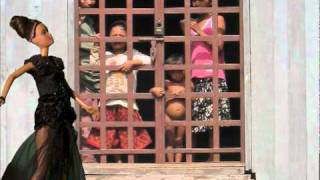

There's no indication in the film that girls are held against their will in Mam's centers (Mam's foundation has not yet responded to a request for comment on this), but Grant says the way we talk about sex work matters too. She advocates discussing conditions for sex workers as a labor issue, not something separate. She compares sex workers' rights to domestic workers' rights: "there are people who do domestic work who experience trafficking, or sexual abuse, and we think of it as sexual abuse, we don't think of it as being a sex slave." She explains, "a worker has power. A slave on the other hand, you can do whatever you want to a slave, whether you're the person who controls them or the person coming in to save them."
Others, too, raise questions about Kristof's portrayals. Momaya says Kristof's writing lacks context, failing to explain the underlying problems that leave women vulnerable to abuse. She says that while he's encouraging Americans to intervene in the problems of the developing world, "he doesn't discuss the role of American foreign policy in supporting wars, violence, the kinds of things that help create the problems."
A number of critics have cast Kristof as interventionist, swooping in to solve problems no one asked him to solve with methods that may make things worse. This critique extends to his journalism — Moore says that in his international work, Kristof "just steps into this role of speaking for" women, rather than allowing them to speak for themselves.
Cambodian women do speak on camera in Half the Sky, as do women from the other countries Kristof and WuDunn visit. And Momaya says Kristof has responded well to some criticisms, and that his work has evolved in recent years (Kristof has not responded to my request for comment). Grant says he has begun responding to critics in his work by, for instance, making a distinction between people who voluntarily choose sex work and people who do it against their will, but that he still misses some fundamental realities of sex work, like that policies aimed at curbing it affect voluntary and involuntary workers alike.
The documentary also has its odd notes, as when Kristof explains that "the wonderful thing about having Meg Ryan with us is that this is her first time meeting victims of sex trafficking." Momaya notes that Kristof's identity as a famous American journalist colors people's responses to and around him — this may be even more true when he brings celebrities along. And, Moore notes, some women interviewed by foreign journalists may fear that "a lack of proper response is going to have economic or social consequences" — this may be especially true if the journalist is also encouraging Americans to donate to causes in developing countries, as Kristof does.

View this video on YouTube
A trailer for Half the Sky.
Concerns about how people respond to Kristof raise the question of whether it's truly possible for American journalists to report well on the developing world. By telling other people's stories, are they always going to be imposing their own views and depriving others of the power to speak for themselves? Momaya says it's possible for Americans abroad to do ethical journalism, but they need to check their own observations against those of local people, rather than merely reporting what they see. And they should be talking to local development and human rights workers as well.
Moore says ethical journalism will have to come in response to "reader demand." Readers should be asking themselves, "Who's being quoted? Are they all white? Are they young? Is there a translator present?" If everyone involved is speaking perfect English, they may be tailoring what they say to an English-speaking audience (though of course translators can tailor as well).
And one big solution to the problem of "speaking for" is to give women themselves the tools to speak — Momaya cites the International Women's Media Foundation as one group helping women tell their own stories, largely online. Better translation tools and the spread of social media may make it increasingly possible for women's voices to reach an international audience without the mediation of a foreign journalist.
In the film, Meg Ryan tells some of the girls taken from brothels, "it's a very powerful thing to tell your story, to say personally what happened to you." Maybe the conversation around Kristof will eventually allow more women and girls to do so.