No, Let’s Talk About Video Game Violence

Gaming’s soul is sick. And gamers hate talking about it.

I know, right? Now tell your friends!
No, Let's Talk About Video Game Violence
John Herrman

Adam Lanza was a gamer.

This fact has been reported, re-reported, and rehashed to the extent that it’s now part of the killer’s capsule bio: Young. White. Male. Asperger’s. Loner. Gamer. This was predictable — not just that this young, withdrawn man played games, as so many do, or that they were violent, as so many are, but also that this detail would capture people’s attention; that the media would repeat it in an insinuating way, and that it would make the public uneasy. My son plays those games. My son loves those games. I play those games.

Even more predictable, though, was this response:

Fox News links Sandy Hook shooting to violent video games. Of course. bit.ly/VFNZdG

CNN/MSNBC: coverage of the Sandy Hook tribute. Fox: some dude ranting about video games.

Astounding ignorance from The Independent. Blame video games in the headline, no mention of them at all in the article ind.pn/T3yIGj

And it’s a response I understand. I remember the misinformed coverage of music and games after Columbine, and I’ve had heated email exchanges with the anti-game crusader Jack Thompson, who once led the closest thing this country has ever had to a cohesive anti-game lobby. I’ve felt defensive about this before, both as a child demanding access to what were in retrospect completely inappropriate games, and as an adult who plays and is paid to occasionally write about them. I feel a hint of defensiveness now too, and cringe at conclusion-jumping like this:
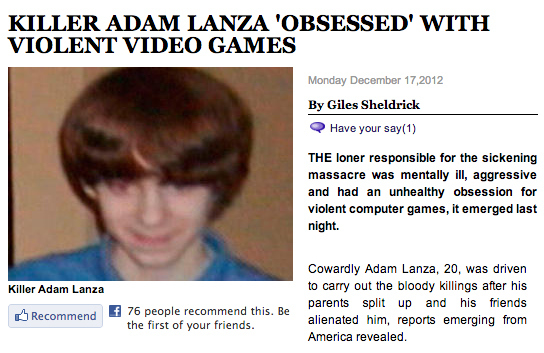
But this discussion has become stale and repetitive, and the knee-jerk defensiveness of gamers and games writers has become dogma. Hashing out the same gamers-as-victim fantasy — which was constructed at a time when gaming really was a fragile subculture, not a $50 billion-plus industry — seems both absurd and insensitive in the shadow of real, and heartbreakingly pure, victimhood.

Take this, from The Inquisitr:

The saying “guns don’t kill people, people kill people” comes to mind in this instance. Video games don’t kill people; people kill people. In fact, the most deadly school massacre in the United States occurred in 1927 at the Bath School in Bath Township, Michigan. No video games were available in 1927, yet 45 children aged 7 to 14 lost their lives.

This line may have made sense in the ’90s, when Doom — a proudly violent and necessarily unrealistic game — was questionably labeled as a “murder simulator” and blamed outright for multiple school shootings. But today, it has a disingenuous ring to it.

Our understanding of the relationship between media and violence has become more nuanced since the early days of the first person shooter (update: for those of you who don’t want to follow the link, it describes a *lack* of proven link between gaming and murder, internationally).

In the meantime, real, existential threats against the gaming industry, in the media, and in Washington, have faded away.

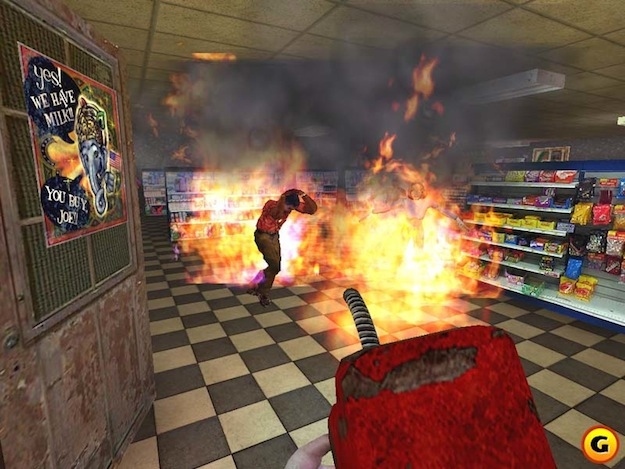
And in response, the gaming industry has grown more brazen and complacent — in those last few years before Thompson’s humiliating disbarment, as gaming went well and fully mainstream, emboldened developers raced to create the most offensive games possible. They had won, and it was time to gloat. I remember the bizarre resurrection of the infamous Postal franchise, Postal 2, a game that let you urinate on other characters until they vomited. The game cheekily encouraged players to terrorize Habib’s stereotypically appointed corner store, and gave players a can of gasoline, matches, and (wink!) a captive room of dancing gay men. I remember Soldier of Fortune, a game that proudly advertised part-by-part bodily destruction in character models. You could blow off arms and legs, or hollow out opponents’ guts.

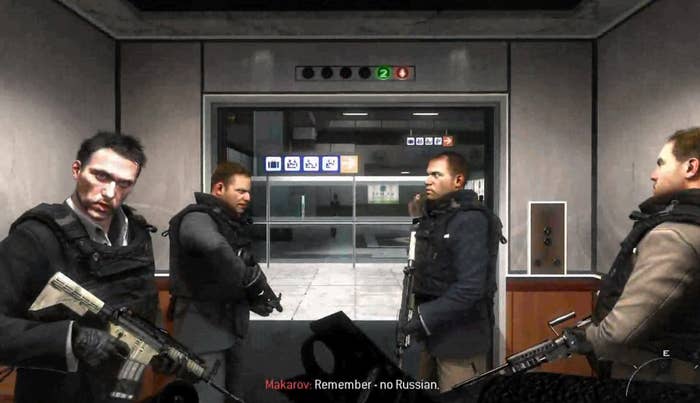
Games like Postal 2 and the Soldier of Fortune series were not representative of the industry as a whole and were clearly intended to offend, so it was easy for defensive gamers to deflect criticism — these were niche titles, after all. But Grand Theft Auto 3 was not a niche title, nor were any of its wildly successful follow-ups. The Battlefield and Call of Duty series have become some of the most successful entertainment franchises in history. Much of the deliberate provocation of the early 2000s has become standard in the world’s top-selling (and far more realistic) games. Modern Warfare II’s notorious airport massacre scene drew criticism, of course. But the next sequel in the franchise became the fastest selling game in history.

All this is to say that while uninformed anti-game sensationalism may be unproductive, gamers’ reflexive defensiveness is worse. It’s prevented us from having a meaningful conversation about an industry that is emotionally and morally stunted, where per-title revenue can dwarf even the most successful films of all time but which seems immune from discussions of taste and artistic merit. A higher-up at one of the largest game publishers in the world once confided in me that when his bosses showed him early footage from a popular first-person shooter produced by another studio in the company, he couldn’t bring himself to watch to the end.

It’s not crazy to feel uneasy that young men’s most influential entertainment products, the cultural touchstones they do and will reminisce about in adulthood, are built around the premise of empathizing with a man with a gun in his hand, who kills not in the crudely symmetrical and grim manner of war but gleefully commits mass slaughter. These games become more like action movies with each passing technological generation, approaching photorealism and pulling players into actual, active theaters of war. These are first-person games with first-person narratives, differentiated from films only by a lack of distinction between viewer and protagonist.

Historically, it’s easy to see how the industry ended up here, how one mega-hit FPS franchise led to another, then another, then another. But that doesn’t make these games any easier to defend on their merits — and it doesn’t mean that this is the games industry we necessarily want. These games are cultural monuments to violence; they are about killing and being killed, and sometimes little more. I’ve played and enjoyed plenty of them, and I imagine I’ll keep doing so. But to dismiss outright worries about what these games are, and why people enjoy them, is a lazy cop out.

We can let ourselves feel guilty as we play these games, and talk about why that might be. We can allow ourselves to wonder what it means that members of Seal Team Six were disciplined by the Navy for divulging classified information in a video game consultation. We can freely ask if these games have any causal force when it comes to violence, or if they’re just a reflection of the culture of a country that’s been at war for a solid decade.

We can feel free to acknowledge that the thought of truly violent and insane people playing and enjoying games about killing makes the stomach churn, in the same way we might be discomforted to find out a killer enjoyed beloved but violent movies. We can stop obsessing over the media blaming the games industry — it hasn’t had real consequences in this country before, and it’s doubtful that it will anytime soon — and take a moment to consider what’s it’s become, and what it should be. This is good. And so is this.

Most of all, we can let the media say it loud and clear: Adam Lanza played games. Probably violent ones. Stating that fact is not a problem. Pretending that it doesn’t — or rather, absolutely can’t — tell us anything about a person? That is.

Check out more articles on BuzzFeed.com!

More ▾

Facebook Conversations


    50 Responses So Far

    • Xeolyte 4 months ago

      I wrote the following in 2004 - A bit of history and evolution about gaming. The bottom line is this though .. the vast majority of gamers don’t turn into sadistic maniacs but a small percentage does because of violent FPS games. What gaming did for Lanza was allow him to practice his massacre and become numb to the violence. I think it’s still relevant. I saw a BBC article about the dark side of humanity in a virtual environment. I must confess that it amused me. My first (1979) computer was a CP/M based system called an Osborne. It was a dual disk drive with a built in modem and about the size of a sewing machine. Way ahead of its time and very portable. You could drive up to a pay phone, run it off the car battery, slap on an acoustic modem, sign onto Tymnet, and log into the Source (which ultimately turned into Compuserve) and turn into a sadistic monster.
      I was one of the few and far between woman on the early net that played multi-player games (this was before BBS’s became popular). I knew 2 facts about the people I played with by virtue of them just being there. 1. They had money. 2. Were well educated.  Women were treated respectfully and not condescendingly. We comprised about 5 - 10% of the users. Most of the multi-player games were word games. Competition was fierce, gender not an issue. But the competition was an intellectual one. I don’t remember exactly when, but the Source was sold by Readers Digest and became Compuserve. Enter the real time, multi-player, very elaborate and dynamic text driven role playing games. The first two were the Island of Kesmai and Galactic Empire.  I played both. I was the original DameBeryl in Kesmai and Zuleika in Galactic Empire. These were ongoing games, like the Virtual Worlds. I lived DameBeryl for over 8 years. The demographics of players was slightly different. Women comprised about 20% of the users now. Users were still educated, but a lot younger, late teens and early 20’s compared to the late 20’s to early 40’s of the Tymnet days. The majority still had money and manners was essentially the norm in these games, but a very subtle rudeness and mercenary tendencies started to creep in within the next few years. By the early mid 80’s computers were getting cheap and the demographics changed radically. Still educated, but class distinction due to money no longer existed. No longer was altruism an assumed thing. Players (always men) were becoming downright evil. There was stealing, ambushing, bullying, murdering and just plain cheating wherever they went. Virtual life was becoming frightening and very stressful. Mercifully for us old timers, it was less than 20%. By the late 80’s a rudimentary police force and government grew in Kesmai and Galactic Empire in response to these rogues. About 1985 BBS’s were cropping up in every town and local members for the most part knew one another. The demographics included just about anybody, except the abject poor and uneducated. Women comprised about 25 - 30%. Games like Kesmai and GE were being cloned to a bare bones level for the BBS’s. It was then that I began to observe the frighteningly real effect a life without consequences in an anonymous virtual world could have. I played all the games and always helped out the newbies in these games, showing them the ropes and seeing that they had a good start. The young guys (15 - 18) were always polite with good manners to start with. Eager to learn and eager to help. I met most in person at BBS’s gatherings. Once they learned the ropes, 60% would turn into HK’s human killers. The viciousness and rudeness coupled with a severe lack of empathy and remorse was rampant. Because of the anonymity, these kids would do any and everything. The games became worlds where they could act out their darkest fantasies. The truly frightening part was that this behavior was spilling into the real world. These once polite and well mannered children were becoming sadistic monsters in real life. Anonymous gaming was a training field for sociopathic behaviors that would carry into adulthood. I ultimately quit mp gaming in the late 80’s mostly because it became terrifying and no longer fun. By then I was no longer surprised by the criminal tendencies of users and it was escalating out of control, actually turning into the norm rather the exception among young men. What I learned from all of this was a kind of intrinsic understanding of social behavior and the societal restrictions on unacceptable behavior. Once these restrictions were removed in a virtual world and users understood there were no real consequences for actions good or bad, predatory behavior was not far behind. I saw what you are seeing now, decades ago. I find it amusing that it has taken the rest of the world this long to see what was so patently obvious back in the 80’s. DigitalGaia

    • maxr2 thinks No, Let's Talk About Video Game V... is Fail  about 4 months ago
    • ingredc   No, Let's Talk About Video Game V... and thinks it’s OMG & Win  about 4 months ago
    • HankFranklin thinks No, Let's Talk About Video Game V... is Fail  about 4 months ago
    • Lennon D. thinks No, Let's Talk About Video Game V... is Fail  about 4 months ago
    • prestonl thinks No, Let's Talk About Video Game V... is Win  about 4 months ago
    • claytona2 thinks No, Let's Talk About Video Game V... is Win  about 4 months ago
    • danielflamingo thinks No, Let's Talk About Video Game V... is Trashy  about 4 months ago
    • hgift thinks No, Let's Talk About Video Game V... is Fail  about 4 months ago
    • Raiil thinks No, Let's Talk About Video Game V... is Fail  about 4 months ago
    • Raiil 4 months ago

      Ah, and now the ‘Hitler ate Sugar’ problem. I find it more troubling that people are unable to sit back and think ‘Gaming is popular, therefore a lot of people do it. If I stopped and considered the number of murderers who played video games and contrasted that to the number of people who were murderers, period, the number may not be that great’. Plenty of people play video games, including very violent ones- I’m one of them. And the vast, vast majority do not go on to rampage and kill.

    • awsa121   No, Let's Talk About Video Game V...  about 4 months ago
    • TyrellCorp 4 months ago

      Australia has the same games and movies as we do, and gun violence is very low. Why? They have really really strong gun laws. Figure it out.  

    • Happy Dude   No, Let's Talk About Video Game V...  about 4 months ago
    • mxdxh 4 months ago

      people cant blame music and video games for every massacre.
      he was unstable to begin with and it was only a matter of time.

    • Ali Wherewithall   No, Let's Talk About Video Game V... and thinks it’s Win  about 4 months ago
    • Ali Wherewithall 4 months ago

      Anyone who loves to pretend kill and who spends hours alone in front of a screen shooting, killing with realistic sound/visual effects:
      1) Is desensitized to life like violence, and
      2) Needs to get out, get a life, get some friends, get some exercise  Just add mental illness into the mix plus isolation, depression and life-like violence= You get a very bad outcome 3) Anyone who defends gore gaming as harmless (see first facebook comment) REFER TO NUMBER 2)

      • Fallacy. Take MLG for example. Take people who compete in million dollar competitions every year for sitting in front of a screen for hours. I play video games, I have for the majority of my life. I come from a military and farmers background in Ireland. And yes I’ve played video games, but you know what I cared about? Getting laid. You know what I do today? Play video games, get laid and run my business while I look forward to a future with my fiance. It has everything to do with the mental state of an individual and nothing to do with what is not reality but pixels. Why? Cause everyone isn’t me and I’m not everyone.

      • vikkir 4 months ago

        Actually buddy your fallacy is strawmanning what he said

    • leinar   No, Let's Talk About Video Game V...  about 4 months ago
    • michaell37 thinks No, Let's Talk About Video Game V... is Fail  about 5 months ago
    • scotts51 5 months ago

      The above video from Modern Warfare 2 just goes to show how deadly assault rifles are in the hands of unstable people.  Gaming isn’t the issue. Lack of mental illness awareness mixed with the readily available high powered guns is a receipt for disaster and frankly we seem to be getting the same cook book out every year or two.

    • daniu 5 months ago

      The problem with “he liked violent video games” is the context. Given the percentage of people playing them, even mentioning them in the wake of a school shooting is like saying “the shooter liked cotton candy”, and it insinuates a connection which is at best confusing correlation with causation, but mostly polemic.
      So yeah a discussion about why so many video games are violent shouldn’t be off the table, it just doesn’t need to be led by people scoring political points off the misery of parents having lost their children.

    • jessicat5   No, Let's Talk About Video Game V...  about 5 months ago
    • jimi_H_stinson 5 months ago

      Let’s blame Marilyn Manson!

    • shanes7 5 months ago

      Do they sell these videogames in countries outside the United States? As a friend of mine said of Michael Carneal, a lad who killed several of his classmates and was known by my friend, “Man, Michael Carneal didn’t kill those kids because of Doom, he killed them ‘coz he was a crazy mother#$%!er.”

    • J H 5 months ago

      How many of those violent videogames DON’T have a movie and/or TV equivalent?
      Postal? That has a videogame.
      War games set in the past/present/future? They have videogames.
      Films where a guy goes on a mad rampage? Yep, from the early 90s and recently too. Why are games so much worse than films which are exactly the same.
      And why can’t games be the SOLUTION?
      Did any of the games Adam Lanza played teach him to shoot? His mother did, at a shooting range.
      Did any of the games let him shoot little kids in an elementary school? He was a loner.
      Did video games ever let him connect with other people? Say at LAN parties?
      Were videogames a hobby that kept him from doing other harmful things? His parents split up and his friends alienated him.
      The social thing he’s reported to have done involved videogames.
      His mother was a nutjob. You figure out what caused it.

    • Daniel P.   No, Let's Talk About Video Game V...  about 5 months ago
    • hermitina thinks No, Let's Talk About Video Game V... is Win  about 5 months ago
    • yassird 5 months ago

      I absolutely hate video games and won’t let my kids play first-person shooters. But when did absolutist 2nd Amendment rights outrank the 1st Amendment rights of free speech? The gunnies who are joining and pointing fingers at video games and movies are essentially more interested in their own guns than they really are in protecting anyones freedom.
      Losen the grip on your AK’s and get a grip on logic.

      • rljkeimig 4 months ago

        This is a terrible argument for everyone, games are not the problem, guns are not the problem. Why do you think the second amendment exists other than to protect the first? Focus on the illness he had, not the punishments we should give out, or the rights we can take away, but the treatment of the mentally ill.

    • Michael R thinks No, Let's Talk About Video Game V... is Fail  about 5 months ago
    • Justin H.   No, Let's Talk About Video Game V... and thinks it’s Fail  about 5 months ago
    • insteally thinks No, Let's Talk About Video Game V... is Fail  about 5 months ago
    • Kevin Tang 5 months ago

      I know friends who work in the game industry in San Francisco who despair at the gamer’s “embattled fandom attitude” re the artistic merits of the media they consume. No other form of widely consumed media has an audience that defines itself as a “fandom”. Once it’s entrenched in that adolescent “fuck the popular kids!” libertarian-ish mindset, it’s hard to even discuss — I’m seeing in the comments section a lot of reducto ad absurdum arguments, misconstruing you as saying that it’s ONLY video games doing this, when you’re only urging gamers to at LEAST entertain that idea of the pernicious influence of some trash FPS titles. Good post. Push this.

    • kristinah3   No, Let's Talk About Video Game V...  about 5 months ago
    • williamng thinks No, Let's Talk About Video Game V... is Trashy  about 5 months ago
    • evilito 5 months ago

      Great article, Buzzfeed. Really. The sickness in our culture obviously can’t be ascribed to just one thing - be it video games or whatever - but it’s encouraging to see postings such as this, rather than the usual defensiveness that people tend to spew.

    • You’re describing a specific instance of a more general problem we have with nuance. We only know how to be for something or against it. To what extent this is caused by the way the news reports “both” sides of an issue and to what extent the news reporting stems from our inability to see more than two discrete sides is unclear. The point is, in any discussion about any remotely controversial topic, people expect you to fall distinctly on one side or another and they process your argument on those terms. The gamers commenting on this article are all responding defensively, because your reasoning does not match the template of a pro-game argument. If you were to post this same article on the fox news website or send it over to Jack Thompson, you would be attacked as pro-gaming. In reality you have made a well-reasoned and nuanced argument that anyone who cares about the future of games should take very seriously. When the massively popular flagship game titles that represent the industry to the rest of the world are bullshit, that allows everyone to assume that the whole industry is bullshit.

    • Cartoon Hangover 5 months ago

      OMG Someone at Buzzfeed wrote some click bait. Let’s all freak out and pretend Buzzfeed gives a f*ck!!

    • swester 5 months ago

      Actually, I’ve read numerous accounts of people - teenagers especially - who find the violence of video games to be therapeutic and cathartic, especially in an era with intense social pressure from cyberbulling, etc. If it weren’t for video games, there might be MORE senseless acts of violence in real life.

    • erneesto thinks No, Let's Talk About Video Game V... is Old, WTF & Fail  about 5 months ago
    • Mrfrunzi thinks No, Let's Talk About Video Game V... is Fail  about 5 months ago
    • SwagasaurusBunny   No, Let's Talk About Video Game V... and thinks it’s Ew, WTF & Fail  about 5 months ago
    • AbusementPark   No, Let's Talk About Video Game V... and thinks it’s Win  about 5 months ago
    • pacer   No, Let's Talk About Video Game V...  about 5 months ago
    • Fiji Wiji thinks No, Let's Talk About Video Game V... is Fail & WTF  about 5 months ago
    • zcesb11   No, Let's Talk About Video Game V... and thinks it’s WTF, Trashy & Fail  about 5 months ago
    • Fiji Wiji 5 months ago

      People can play violent video games because they can discern the difference between video game and real life. Nerfing all games is not going to solve anything and studies have proven that video games have no correlation to real violence. People were the same way about Rock music and comics back in the day.

      • MrJM 5 months ago

        studies have proven that video games have no correlation to real violence Citation needed.

      • Fiji Wiji 5 months ago

        http://www.washingtonpost.com/blogs/worldviews/wp/2012/12/17/ten-country-comparison-suggests-theres-little-or-no-link-between-video-games-and-gun-murders/

      • DooB 5 months ago

        That is correlation to gun murders alone. They are correlated with an increase in aggression. There is some degree of bias because trying to find a correlation to a specific type of crime must take into account the means to commit such a crime. Ex. Japan has a huge number of violent video game players, but guns are extremely tightly restricted. BUT Japan also has one of the highest rates of rape. It makes more sense to look at the correlation of playing to violence in general.

      • Fiji Wiji 5 months ago

        Great point but where does it say that video games are correlated with an increase of aggression? It’s not like crime in general suddenly rose once violent video games hit the market. If that was the case, this conversation would have ended years ago. They’ve been takes a swing at video games for almost 20 years. These people never offer a solution on top of it. That right there tells you their intentions. Are we gonna ban violent games, movies, music, books? Are we just going to pretend these things don’t actually happen even with the news reports death every couple of hours?  People are pointing at video games because it’s an easy choice. It requires no other action. The fact that video games are even being brought up shows you the bias. The CT shooter was a fan of WoW which a very mild game. Even laughable. If an individual can’t discern the difference between the virtual world and the real one, clearly that person has issues that need to be addressed. These people go without treatment for whatever reason. They usually have some sort of trauma in their past and they’re able to get their hands an assault rifles and ammunition easily. Then people want to point the finger at violent games even though hundreds of millions of people play the same games without incident. Those people have an agenda because they don’t get the appeal so they want to just do away with it without proper thought. Same thing happens with music and movies.  I’m all for doing the research. Do all the studies you want but as someone who’s within the community, I can tell you that there is more then likely no correlation. Even IF there was, lack of mental health treatment and the availability of weapons is more likely to be the issue. The NRA and all those associated want to push the issues away from them and they’ll use those connections and money to do so. Nothing new. On top of that, mental health facilities are losing funding so they can’t properly handle the people that need the help. Easy resolution, let’s reinstate their budget. Not going to happen because right now, they are trying to cut down on spend which includes mental health facility funding. Fucking politics. So, what’s the next best thing? Blame the culture. What games did he play? What music did he listen to. As we all know, if you play Call of Duty long enough, you’ll eventually try to shoot someone in real life. A controller and AR-15 one in the same, right? I’m sure every time you see violence on TV you suddenly have the desire to kill someone.

      • DooB 5 months ago

        No one is pointing at video games as THE cause of violence, just one of the contributing factors that we need to actually start talking about and recognizing as a contributing factor. You’re all for doing the research… and yet the research doesn’t matter to you because of your availability heuristic. Sigh… Well. Here’s the link anyway.
        http://www.apa.org/science/about/psa/2003/10/anderson.aspx

      • Show 1 More Contributions ...
    • franklinp2 thinks No, Let's Talk About Video Game V... is Fail  about 5 months ago
    • nlupus thinks No, Let's Talk About Video Game V... is Fail  about 5 months ago
    • BuzzfeedThePoor thinks No, Let's Talk About Video Game V... is Trashy, WTF & Fail  about 5 months ago
    • trudelke thinks No, Let's Talk About Video Game V... is Fail  about 5 months ago
    • jacquik3 thinks No, Let's Talk About Video Game V... is Fail  about 5 months ago
    • liam 5 months ago

      We have a lot of the same games in Australia, some are censored but most are not. No mass shootings since ‘95. This is generally credited to the Howard govt’ gun buybacks. Obviously the country’s are culturally different. But I don’t think Americans are somehow more likely to be influenced by game violence.

    • AceKing   No, Let's Talk About Video Game V...  about 5 months ago
    • Andrew Gauthier   +  No, Let's Talk About Video Game V...  about 5 months ago
    • introvert 5 months ago

      If you take away guns from violence, you still have violence. Next.