What It’s Like To Be Blamed For A Classmate’s Suicide

When 15-year-old Phoebe Prince took her own life, Flannery Mullins and five classmates ended up in court for allegedly bullying her. Inside the story of “the South Hadley Six.”

I know, right? Now tell your friends!
What It's Like To Be Blamed For A Clas...
BuzzFeed Shift

Ashley Longe, left, Flannery Mullins, center, and Sharon Chanon Velazquez, right, all members of the “South Hadley Six,” at a 2010 hearing. Image by Michael S. Gordon / AP

After 15-year-old Phoebe Prince of South Hadley, Massachusetts, committed suicide in 2010, six of her classmates (the “South Hadley Six”) were essentially charged with bullying her to death. Emily Bazelon reported on the charges for Slate, and her just-released book Sticks and Stones takes a deeper look at Prince’s story and at bullying in general.

The following is an exclusive excerpt from the book, focusing on Flannery Mullins, one of the South Hadley Six.

“I felt horrible that Phoebe died,” Flannery told me, yet she also rebelled against the shame the media coverage suggested she was supposed to feel. She didn’t defend Sharon and Ashley for calling Phoebe out as a slut, or Sean for encouraging it, but she didn’t think she had bullied Phoebe, and she definitely didn’t think she’d done anything to cause her death. What she thought, though, didn’t matter. “I’d turn on the TV and there was this story about a girl who lived in a house with a white picket fence,” she said. “We were the mean popular girls who just attacked her, and we weren’t mad at our boyfriends at all — we just took it all out on Phoebe. She was the angel and we were the devils. I knew there were layers and layers of this girl, but no one would discuss any of that because they didn’t want to blame the victim.”

Flannery hadn’t spoken to Phoebe in the week before her death. In fact, aside from their brief meeting in the assistant principal’s office, after Flannery vented in gym class about her anger over Austin, she’d hardly talked to Phoebe at all. But the TV shows and the tabloids didn’t care about the varying degrees of culpability from Ashley to Kayla to Sharon to Flannery. The media lumped the kids together as the “South Hadley Six,” using their old yearbook photos instead of mug shots.

During the two-and-a-half-month-long investigation, Flannery never apologized to Phoebe’s family because she didn’t know what exactly to apologize for, and because she was trying to lie low rather than bring a new spike of attention to herself. None of the kids had said they were sorry — a fact that only deepened the distress and anger of Phoebe’s family. Once district attorney Elizabeth Scheibel an- nounced the criminal charges in April, their lawyers advised them not to apologize, because they saw no way for the teenagers to take a share of responsibility without exposing themselves to legal risk. This is standard advice, but it made the kids seem heartless.

“If these charges hadn’t been brought, it would have been a completely different situation,” Flannery told me. “Maybe there would have been remorse. But they put me into a corner. I had to defend myself.”

Scheibel had charged Flannery and Sharon, both sixteen, and Ashley, who was seventeen, as minors. But in an unusually aggressive move, the DA bypassed the privacy protections of juvenile court and made all six of the kids’ names public. (Sean, Kayla, and Austin were indicted as adults.) And once they were named, the press had no compunction about hounding them. Reporters camped out on Flannery’s lawn, making it almost impossible for her to go to work. One of her neighbors screamed “slut” and “whore” at her whenever she left the house, and started blogging about Flannery’s movements. The household was under siege, and the stress strained the marriage of Flannery’s mother, Jen. The public nature of the indictment “meant the end of our lives as we knew them,” Jen told me. “People get indicted every day and you never hear about it, but Betsy Scheibel’s mission was to smear these kids.” Everywhere Flannery ventured where she met new people — parties, stores — she faced questions and denunciations, with people assuming her guilt and her responsibility for Phoebe’s suicide. “It was like a runaway freight train,” Jen said.

Flannery’s lawyers tried to reassure her and her mother that the case against her was full of holes. For starters, the most serious felony charge — civil rights violation with bodily injury — required an act or threat of force, and Flannery’s remark in gym class that “someone should kick [Phoebe’s] ass” was a stretch. For another, the causal connection between anything Flannery had done and Phoebe’s death was, to say the least, attenuated. Still, the lawyers cautioned Flannery against talking to Austin or seeing him. Isolated and living under a kind of media-imposed house arrest, Flannery was touchy and antsy. She felt as though her whole existence was about being under indictment — and it was impossible to imagine returning to normal.
The next day it was Flannery’s turn. She appeared before a different judge, with Sharon and Ashley, at the smaller, humbler juvenile courthouse in Hadley, one town over. Flannery had struggled over whether to accept her plea deal. She thought about daring the prosecution to take her case to trial. “I thought, let them try,” she said.

But that would have meant months, or even years, with serious criminal charges hanging over her head. Flannery had turned eighteen, and it was time to move on, to look ahead, to stop reliving the upheaval that split her life in two: before and after. She agreed to admit to what she’d said about Phoebe, about how “someone ought to kick her ass,” the basis for the charge that she’d disturbed a school assembly, that is, her gym class. In a strained resolution of the civil rights charge, Flannery also took responsibility for Sharon’s misconduct — calling Phoebe a whore at school — even though Sharon said from start to finish that she’d done this on her own. In exchange, Flannery would get probation and community service with the understanding Kayla had: once she completed her sentence, her record would be clean. Ashley and Sharon got the same kind of deal. Austin fared even better: the statutory rape charge against him was dropped.

At the hearing, Flannery wore a white oxford shirt, the collar crisp at the fold, and her blond hair coiled into a bun. The lawyers dispensed with the preliminaries, and Anne O’Brien rose to speak again. “Phoebe had as much right as Flannery Mullins to be in school,” she said, reading from her notes. “She was an intelligent student with a promise of high achievement. She loved her accelerated English class and having her own blog to share her writing. Phoebe loved her history class… . She loved the challenge of her Latin class and was in awe of her teacher’s intelligence… . Yet with Flannery Mullins’ very numerous threats to beat her up, school for Phoebe became intolerable. In her words, it was not a place of solace and intellectual challenge, but simply a challenge to make it through each day without coming to harm.”

Flannery was looking straight ahead, her features unmoving, betraying nothing. O’Brien kept going. “Flannery Mullins used her time in school to berate Phoebe in corridors and in the classroom… . When she was brought before school officials to address her actions, she took no ownership of them, and placed the blame on Phoebe… . She followed her into the bathrooms, the hallways and classrooms of the high school. Phoebe soldiered on, struggling to get through each day, hoping the next would be better. Phoebe drew a sketch on one of the folders I keep my school papers in, of a candle with a flame. And underneath she’d written, ‘There is always a light.’” Anne’s voice broke as she turned to look at Flannery. “Phoebe tried to be strong but sometimes people want nothing more than to break you.”

Anne paused, but she wasn’t finished.

“Phoebe ended her pain, brought about by the harassment of many, including Flannery Mullins, harassment that could easily have been stopped if any of those involved had ever reached inside themselves to find their own compassion. I have not yet buried Phoebe’s ashes. I’ve been waiting for peace to do so. I know now today it may never come. So I will return home and bury my daughter. With her qualities of compassion, empathy, and zest for life, Phoebe gave me some of the happiest moments of my life. My pain is unbearable and it will stay with me until my own death and I would not wish this pain on any parent.”

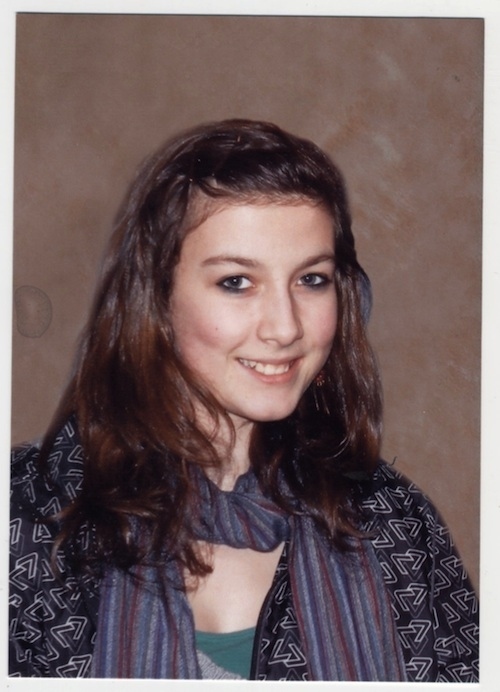
Phoebe Prince, who committed suicide in 2010. Source: The Republican /Landov

In this wrenching torrent, Anne had again claimed her right, as a mother in mourning, to go beyond the facts in the record. No one dared question her judgment in doing so.

But it was hard for Flannery to swallow her defiance. She knew Phoebe’s mother had suffered, but she couldn’t accept Anne’s narrative of her daughter’s death. “Everyone said I was heartless because I wasn’t crying in court, but in my mind, I didn’t do anything,” she told me later. “Of course it’s so sad Phoebe died, but her mother screaming at me, telling me it’s my fault — I thought that was extremely immature. I know that’s horrible to say.”

I asked if she’d thought about changing her name or moving away from western Massachusetts, and Flannery shook her head. “I’m not ashamed,” she said. “I have no problem defending myself. I don’t want to be ashamed. I think it would be harder for me if I sat down and was like, ‘I’ll change my name, and I’ll move, and no one will know me.’ No. If you have a problem with me, you can tell me, and I can explain that it’s not the truth. If people are ever going to digest the real story, they have to accept the fact that the picture of Phoebe that was painted isn’t true.” Flannery knew that the tragedy of Phoebe’s suicide made that extremely difficult to do, but she was holding fiercely to her reality.

The relationship between bullying and suicide turns out to be complicated. It’s true that there’s an association between the two, for both girls and boys: studies show that kids who are bullied are also more likely to think about or try suicide. The link is especially strong for gay kids.
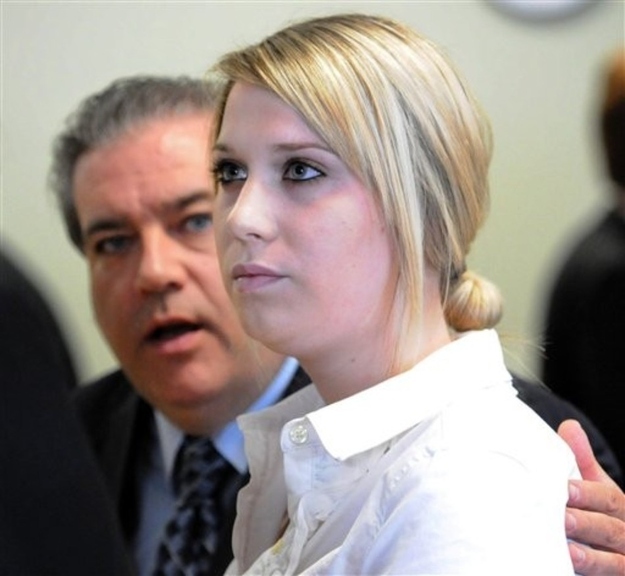
Flannery Mullins at a 2011 hearing. Image by Michael S. Gordon / AP

Whether bullying predicts suicide, however, is a separate inquiry. It’s a chicken-and-egg question: are kids who are involved with bullying more likely to be suicidal in the first place, or does the experience of victimization place them more at risk? For kids who experience school-age bullying, the research is mixed. Finnish and Australian studies found that bullying didn’t predict depression or attempted suicide once a child’s prior mental health was taken into account — in other words, when children were bullied, they didn’t become more likely than they otherwise would have been to develop, as teenagers, the symptoms of depression that are the biggest risk for suicide. On the other hand, a study of Norwegian eleven-year-olds by Dan Olweus, and another study of Korean seventh and eighth graders, found that bullying did predict depression and attempted suicide. Still another Finnish study of eight-year-olds who were bullied, and then followed up ten years later, showed the results varying by gender: among girls, frequent victimization was associated with later suicide attempts even when controlling for depression, whereas for boys the same was not true.

The upshot is that there is some reason to think that childhood bullying, on its own, elevates the risk of depression and suicide, but the picture isn’t yet clear.

And it’s even less clear for kids who are bullied in high school. In a recent study of whether bullying at this older age predicts suicide attempts — the only one of its kind I could find — Columbia psychiatrist Madelyn Gould and a team of researchers tracked three groups of teenagers. At an initial screening, the first group, which totaled 221 students, reported suicidal behavior or thinking, depression, or substance abuse. The second group, with ninety-six students, had the same psychological profile and also had been involved in bullying. The third group of 236 had been involved in bullying but were not depressed, suicidal, or substance abusers.

Four years later, Gould’s team went back and interviewed the same teenagers. On average, the 236 young adults who’d experienced bullying but did not have the at-risk psychological profile were less likely to be suicidal than the young adults who did, whether they were bullied or not. “Involvement in bullying behavior (as a bully, a victim, or both) in the absence of other risks in high school did not predict later depression, suicidal ideation, or suicide attempts,” Gould and her colleagues wrote.

Gould calls for more research, but she is adamant that it’s wrong to attribute any one suicide entirely to bullying, as media accounts often do. “The problem with saying bullying caused a suicide is that it oversimplifies,” she told me. “It implies that one person’s death by suicide can be attributed to one event or factor, which is just not true.” She sees these “bullycide” narratives as part of a longstanding mis- guided pattern. “We’ve singled out different scapegoats for suicide for decades,” she said. “We blamed the mean teacher. Or the bad parents. Or Dungeons and Dragons, or working mothers, or divorce. Now it’s bullies, and especially mean kids on the Internet. The thing is, there can be some truth to these explanations. When someone is vulnerable, and then they experience what we call a stressor event, and they are humiliated, that can be terrible for them. But it’s crucial to remember that what we’re also seeing as these narratives take shape is our underlying need to try to understand an event that family members and friends find so inexplicable.”

It’s imperative not to blame families for the current fixation on bullycide. This is something that Michele Dauber, a Stanford law professor whose daughter took her own life at twenty-five after a long struggle with depression, impressed upon me during a conversation over the course of several weeks. Dauber reminded me of an arresting image in the Harry Potter books: because they have seen death, Harry and a friend, Luna Lovegood, can see a winged, skeletal horse, called a Thestral, that’s not visible to anyone else. This is Dauber’s metaphor for being a parent who has lost a child. “I’m different from you,” she told me. “Because I now understand that nothing is promised. Good things aren’t a reward and bad things aren’t a punishment. There is nothing we can do to avoid tragedy — sometimes it just comes, and when it does, the world is no longer a benign place full of excitement to look forward to, or even a place where we go to work and put food on the table, but a terrible, miserable slog in which one by one everyone we love goes away forever, unless we die first. That is what being the parent of a dead child is like. So how can we blame these poor people if they aren’t seeing things the way we think they should?”

From the Book, STICKS AND STONES by Emily Bazelon. Copyright (c) 2013 by Emily Bazelon. Reprinted by arrangement with Random House. All rights reserved.
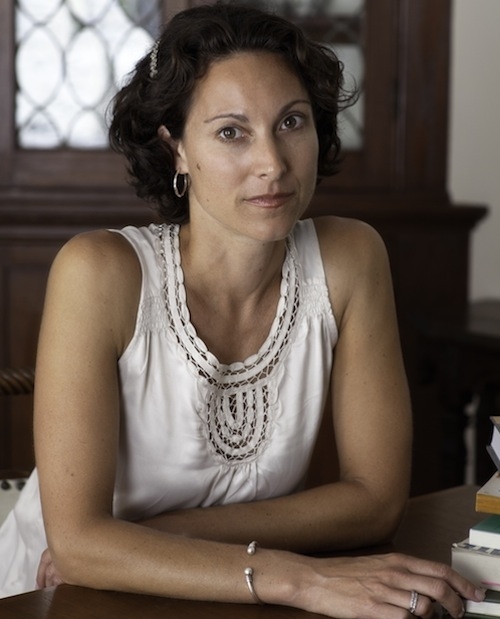
Author Emily Bazelon. Source: Nina Subin

Check out more articles on BuzzFeed.com!

Facebook Conversations
          
    • stormish   What It's Like To Be Blamed For A...  about 3 months ago
    • Lyle Winters   What It's Like To Be Blamed For A...  about 3 months ago
    • OldieSloth   What It's Like To Be Blamed For A...  about 3 months ago
    • myteebay thinks What It's Like To Be Blamed For A... is Fail  about 3 months ago
    • chrissiekins 3 months ago

      A man has a difficult job. His boss is constantly breathing down his neck. His boss intimidates him, patronizes him in meetings, embarrasses him in front of his colleagues. The man can’t handle the pressure and kills himself. Do you charge his boss with murder - or any charge at all? No. No you don’t. There’s a certain amount of guilt that you would like the boss to feel, of course, but the decision to end one’s life is in the hands of no one else. It’s a solitary activity. It’s tragic. People act like dicks to other people all the time, every day. It doesn’t make it right, but it doesn’t make it murder either. Flannery was a dick. But she didn’t kill Phoebe, not single-handedly, not part of a group, not at all. She acted like an asshole to a girl that slept with a boy she liked. She tormented this girl in ways far tamer than some and maybe worse than others - but suicide isn’t a tidy murder mystery. It’s complicated. It’s easy to blame Flannery. It’s not so easy to accept that there are no acceptable answers. Phoebe, by accounts I’ve read in this case, had a history of self-mutilation and bullying before arriving to this school and encountering Flannery. Maybe Flannery was the straw that broke the camel’s back (pardon the cliche), but damage had been done long before Flannery arrived into this girl’s life. It’s easy to say “This girl was mean to another girl and she killed herself” rather than “I knew this girl had some issues with depression and self-mutilation and failed to help her with this problem.” Not everyone who is bullied kills themselves. Not every man who has a difficult boss kills himself. Not every depressed person kills themselves. There are some factors you just can’t quantify - no matter how much it would make things better.

    • janev5 3 months ago

      I can’t understand/explain why some kids feel compelled to be cruel to another person regardless of what they think the person did to merit such actions (ie… being a “slut” or being “the weird kid”)… perhaps to feel better about themselves and their own flaws? Jealousy? Who knows. It seems we are reading/hearing more and more about kids who commit suicide as a result of bullying. I was bullied as a kid and a teenager, but I never once felt like I needed to kill myself over it. Then again, I just barely escaped my teens right before internet trolling/bullying took over. I’m not victim blaming, or justifying bullying, but in addition to waging this war on bullies, perhaps we should devote some time to the mental health of teens and kids. Nowadays it is so easy to be a bully, you can even do it anonymously… so adults can’t really fathom what its like to be a kid/teen in today’s world of internet trolling and gossip spreading. I think equal time should be spent teaching kids compassion for others and addressing the mental health of your kids. At home and at school. How about we just make all these kids work and pay bills, see who still has time to go around bullying.

    • CJ   What It's Like To Be Blamed For A...  about 3 months ago
    • Matt G thinks What It's Like To Be Blamed For A... is COOL  about 3 months ago
    • stephanien7   What It's Like To Be Blamed For A...  about 3 months ago
    • fanaca thinks What It's Like To Be Blamed For A... is OMG  about 3 months ago
    • Grace Bixby   What It's Like To Be Blamed For A...  about 3 months ago
    • emmak6 3 months ago

      I was bullied from age 8 to about 17. Not exactly sure why I was picked on, but they just all joined in. Especially boys beating me up and calling me names (I’m a girl)
      This led to depression all through my Teens and Twenties. I’ve been suicidal many times. Seriously, fuck bullies.

    • kristena6   What It's Like To Be Blamed For A...  about 3 months ago
    • mikes65   What It's Like To Be Blamed For A... and thinks it’s Trashy  about 3 months ago
    • Christen850 3 months ago

      To the author: It seems you skipped the research (see link below). A lot of Flannery’s defense (of herself and from you) is based on her insistence that there was only one incident in a gym class. You add that she “hardly talked to Phoebe at all”, which is not true. It took me less than 10 minutes to find a legal document detailing numerous incidences detailing Flannery’s CONTINUOUS threats, insults, intimidation, and cyber-bullying (sometimes even using Phoebe’s image in public posts). Did you bother to read the witness reports before publishing this? If you’re interested, the link is here: http://i.cdn.turner.com/cnn/2010/images/04/09/mullins.pdf
      I can’t imagine how anyone would fall for Flannery’s story of guilt-by-association, much less publish it in a book. Especially considering she had the impudence to call into question Phoebe’s character, as well as the character of Phoebe’s mother. Shocking.

    • Courtney Mastin   What It's Like To Be Blamed For A... and thinks it’s OMG  about 3 months ago
    • JennEfer   What It's Like To Be Blamed For A... and thinks it’s OMG  about 3 months ago
    • Quinn St. Clair 3 months ago

      Oh boy. My favorite passage is where Mullins defends her aggressive actions and subsequent abdication of guilt by calling a grieving mother “immature”. I hope this loathsome wench learns what loss is all about one day.

    • Leron V   What It's Like To Be Blamed For A... and thinks it’s OMG  about 3 months ago
    • Rilmawen thinks What It's Like To Be Blamed For A... is OMG  about 3 months ago
    • lisac53 3 months ago

      At what age does bullying transform into harassment? I am 33. If I do what Flannery and her pals did at 15 to Phoebe, I would be arrested, charged and likely have a restraining order in place. Maybe if teens had a real world consequence instead of “kids will be kids”, there would be progress. How can we diminish the severity of such aggressive and harmful behavior merely due to the age of the perpetrator?

    • Kater   What It's Like To Be Blamed For A... and thinks it’s OMG  about 3 months ago
    • furbsie   What It's Like To Be Blamed For A... and thinks it’s Fail, Ew & Trashy  about 3 months ago
    • BonCrom 3 months ago

      I didn’t mean to ‘love’ this. @lexmarksthespot (I’m on my phone so it wouldn’t let me reply). BUT, yes, yes, a thousand times, YES!!!! That is the most reasonable, rational answer I have read on this thread!  Thank God that SOMEONE here is rational and not one side or the other!

    • sarahtran thinks What It's Like To Be Blamed For A... is OMG  about 3 months ago
    • natashao   What It's Like To Be Blamed For A... and thinks it’s Trashy & Fail  about 3 months ago
    • berenice thinks What It's Like To Be Blamed For A... is OMG  about 3 months ago
    • katiekat1690   What It's Like To Be Blamed For A...  about 3 months ago
    • spinthestars   What It's Like To Be Blamed For A...  about 3 months ago
    • AquaRegia 3 months ago

      Repeat after me: You are NOT THE VICTIM. Don’t you dare make this about your feelings when you didn’t gave a shit about the feelings of the person being bullied when it wasn’t too late.  You not only do deserve the harsh words, you earned every one of them. You stood by and did nothing when they got tormented, you laughed with the crowd, you might even have participated. And now that they’re dead, you feel bad and you think you deserve sympathy for people pointing out what you did or refused to do, because it makes you feel bad? FUCK YOU. You apparently learned nothing.

    • elizabeths43   What It's Like To Be Blamed For A...  about 3 months ago
    • oddee.com readers just made What It's Like To Be Blamed For A... hotter  about 3 months ago
    • salon.com readers just made What It's Like To Be Blamed For A... hotter  about 3 months ago
    • mia gomez   What It's Like To Be Blamed For A...  about 3 months ago
    • jackieleas 3 months ago

      I hadn’t followed this case, or even heard of it before I read this article, so of course my views are tainted because of that. Maybe I’d feel differently if I read something other than this article, but this does paint a dim picture for Flannery and make me sympathize with her. People who call her a “sociopath” … had you followed this case? Do you know more than I do? (Honestly wondering.)

      • Christen850 3 months ago

        Flannery is severely downplaying her direct involvement with Phoebe Prince. Here’s a link to the court document detailing every known instance of Flannery threatening, insulting, following, and intimidating Phoebe. ( Give it a read — I wish the author of this article had read it.) http://i.cdn.turner.com/cnn/2010/images/04/09/mullins.pdf

    • What It's Like To Be Blamed For A... is starting to get hot on Facebook Share It  about 3 months ago
    • thedailybeast.com readers just made What It's Like To Be Blamed For A... hotter  about 3 months ago
    • lexmarksthespot 3 months ago

      These comments are shameful. For fucks sake, whenever emotional topics are brought up people pick up their pitchforks and start stabbing whichever side they don’t agree with. How about some ration and open mindedness. Did nobody ever tell you to look at both sides in the issue? Look bullying is bad. Children committing suicide is bad. Even the most polarized commenter here can agree with that. But can’t we place blame on everyone? There are always layers of responsibility when something happens. It’s SO easy for people to point and say ” It’s a (person A)’s fault” wipe their hands and be satisfied with simplifying tragedy. Humans are complicated and the biggest disservice we do to ourselves is simplifying things and feeling comfort in that.  People who bully should be punished, but they should also receive mental health services to examine why they feel the need to bully. Only giving compassion to once side of emotional abuse is no way to solve a problem. It’s not “letting them get away with it” or excusing their behavior but it’ll likely prevent that person from repeating the behaviors and affecting others. There will always be mean people, but it’s not right to say “fuck it they’re mean, punish them and give no forgiveness” because that will just continue the cycle of abuse and on the other side of that coin inevitably create more victims.  And here’s the “controversial side” about talking of the girl who committed suicide as a two demential caricature who is the perpetual victim who’s choice to end her life was the unavoidable reaction to a bully’s actions. It is not victim blaming to look at the motivations behind the actions of a victim in order to paint a clearer picture of the situation, and in fact omitting that does a disservice to her. The normal reaction to bullying and getting picked on is not suicide. That’s not cause and effect. There have to be other factors for a child to take such extreme action. To clarify I am not talking about the child’s reaction but instead the support system around her and how we as a culture fail bullying victims. Society has to de stigmatize and make available mental health services. If kids being bullied have an outlet from an outside voice of reason they have stand a much better chance at leaving a bad situation as a stronger person. The true true evil in this situation is neither the bully or the victim but how we as a society tell that story. How the media takes liberty to simplify and sensationalize so that the average person can watch the story in a five minute segment and be left with no questions about how they feel. In that was bullies and the bullied are both victims to adults that take their lives and use them as disposable props to earn ratings. The only true way to look at the tragedy of the human condition of being mean to one another is with compassion for all involved. We’re not going to do any good if we sit around bullying the bullies or using dead children as emotional punctuation for our own political arguments. Suicide is a symptom, it’s a symptom from a huge void of understanding and compassion in our culture. Healthcare and access to mental services should be a right in this country and it should be the first step for adult observing the behavior to have both bully and victim sit down and talk to someone. It’s the only way the cycle is ever going to have a chance at being stopped. TL:DR; Bullies and the bullied are both victims of the types of conversations we as a culture have about the situation. The lack of compassion and logic that disgust me in these buzzfeed comments are typical of how our country acts about it. The only thing that’s black and white in this world is that people who only see the black and white of things are fucking idiots.

    • Youkeyy thinks What It's Like To Be Blamed For A... is Fail  about 3 months ago
    • TheDude415 3 months ago

      I have to wonder whether or not the book’s author, as well as the people at Buzzfeed who posted this, were bullies themselves when they were younger. They certainly seem to sympathize more with the bullies than the victim.

    • katiew20   What It's Like To Be Blamed For A...  about 3 months ago
    • Halpiee   What It's Like To Be Blamed For A... and thinks it’s Trashy  about 3 months ago
    • ViolatedDonut   What It's Like To Be Blamed For A... and thinks it’s Win  about 3 months ago
    • akatobi2002 thinks What It's Like To Be Blamed For A... is OMG  about 3 months ago
    • Lyvian   What It's Like To Be Blamed For A...  about 3 months ago
    • WheresWallace   +  What It's Like To Be Blamed For A...  about 3 months ago
    • Garrett Ann Riley   What It's Like To Be Blamed For A...  about 3 months ago
    • marys27   What It's Like To Be Blamed For A...  about 3 months ago
    • ImALoserBaby   What It's Like To Be Blamed For A...  about 3 months ago
    • BonCrom 3 months ago

      Victim blaming?! Really?! Bullying DID NOT cause this girl’s suicide. It may have been a factor, but it was not these kids’s fault that it happened. This girl is NOT a sociopath. This girl was a teenager, being a teenager. I was bullied ALL through school. And you know what? It made me a better person. It has given me chance to say, “look at how happy and successful I am now. Look at how much I have grown up.”  It’s sad that the Price girl killed herself. I feel for her and her Mother. But, it does no good to point fingers. She did it herself. She made the decision herself. She may have had depression issues that no one was aware of. To try and blame it on someone else without knowing ALL the facts is ludicrous.  Personal responsibility is LOST in today’s world. *facepalm

    • speelingmistake 3 months ago

      ‘but in my mind, I didn’t do anything,’ jesus christ, that was jaw dropping. She really hasn’t learnt anything from this. What a little sociopath.

      • TheDude415 3 months ago

        A lot of bullies are. The stereotype is that bullies come from troubled homes themselves, and lash out at those weaker than them. i.e., bullies are victims too. That’s the case sometimes. In my experience, more often than not, they just have no empathy and are completely sociopathic toward their victims.

      • Devin C. 3 months ago

        It may not be sociopathy. If the crime is such an enormity that admitting any guilt to oneself means a complete destruction of one’s self-image, denial may be the only option.  I’m not saying it’s the correct response, or constructive, or anything. But sociopathy isn’t the only reason people deny responsibility for horrible things they’ve done.

      • A.Leigh 3 months ago

        What Devin said. In general, people are VERY reluctant to accept things that force them to drastically alter their self-perception. You have an image of yourself in your mind (which likely involves you being a good person), and if something happens that should force you to realize that image is completely wrong, you’re going to fight against it. Give it a few years (it seems like it’s been a couple already, but since the media/court nonsense is still going on, it doesn’t really count). Self-perception changes over time, and lots of people look back on who they were in high school and realize they were completely different from how they thought.

    • Xerdo Pwerko 3 months ago

      Maybe if the bullies were men, Buzzfeed would not resort to Victim-Blaming and defending bullies as part of a probably paid insertion of a mediocre pseudo-author. Maybe they are too pretty, too popular, too something… to be guilty of bullying someone to death? What a shameful article. Buzzfeed used to be cool.

    • Halpiee 3 months ago

      Something about this chick reminds me of Joffrey Lannister. I think it’s the bitching, refusing to take fault, cowardice, and a little bit of chronic bitchface.

    • ViolatedDonut 3 months ago

      What amazes me is that all these people who are in effect bulling the bully. Following her everywhere she goes, purposely making her life hell because she bullied someone else. They don’t see that they are no better than the person they’re publicly shaming.
      What happens when a bully on trial kills themselves because of pressure from media attention and backlash? Right or wrong, I doubt the narrative will be the same. Nobody will be put on trial for causing the suicide of a bully because “they deserve it”. Oh the irony. Also whatever happened to personal responsibly? I know the mother is grieving but she needs to accept that it was her daughter that killed herself, not at the hands of another individual.

      • copperreddc 3 months ago

        They don’t see that they are no better than the person they’re publicly shaming.  You’re insane. Public shaming is a justifiable punishment when the law is inadequate or inappropriate. These evil little women are being punished because they DESERVE to be punished.

      • A.Leigh 3 months ago

        Even aside from whether it’s “bullying the bully” or “public shaming,” and completely avoiding the issue of whether it’s acceptable or not, I was pretty taken aback by the part where it says people were shouting “slut” and “whore” at her. She’s not on trial for anything sexual (and, if I’m understanding the not very helpful article correctly, part of why she did what she did is because the other girl slept with her boyfriend—which is not to say she didn’t go overboard, but how many high schoolers would be nice to someone after that? or people in general?), they’re just using them as default insults towards her. That’s pretty messed up.

    • TheDude415 3 months ago

      The article linked to, written by this book’s author, is a classic example of victim-blaming, implying that Phoebe Prince’s problems before she moved, and later, at this school, justified her being bullied.

    • Zwantea 3 months ago

      It’s not their fault the girl wasn’t strong enough

    • samantha guerin thinks What It's Like To Be Blamed For A... is Trashy  about 3 months ago
    • marys27 3 months ago

      Thank you for presenting another side to the story. I appreciate it. Everyone has their own experiences to share.

    Now Buzzing