
For Democrats, there may be few things more entertaining than watching the Republican Party self-destruct and fight with itself these last few weeks. But it may be time to put away the party favors – because a Democratic internal war may be on the way.
Just as Republicans were so divided over taxes – from failing to pass their own “Plan B” bill last week, to their leaders splitting votes on last night’s legislative package – Democrats are about to endure an emotional debate about one of their own bedrock principles: the protection of programs like Social Security, Medicare, and Medicaid.
With the accord reached last night failing to address these programs, Republicans have said they’ll threaten to deny a debt ceiling increase in February — which would prevent the government from paying its bills, exacting a government shutdown and global economic consequences in the process — as leverage to advance their policy interests. In addition, with sequestration cuts set to hit in two months, there’s an additional, built-in point of negotiation between the parties.
The biggest reform Republicans have vowed to push for in these upcoming standoffs is so-called “entitlement reform,” a.k.a. “deficit reduction,” a.k.a., cutting social insurance and benefits for those in need.
The problem for Democrats: No one in the party agrees on how to address the issue.
The White House has repeatedly expressed a willingness – even an interest – in reducing the deficit through cuts to these programs. In his recent negotiations with Republican House Speaker John Boehner, the President floated cutting benefits to Social Security through a new cost of living index called “chained CPI” that would essentially revise down the government’s estimates of how much seniors need to cover their expenses. The result, of course, would be reduced benefits.
Moreover, last night the President was clear in his openness to discussing changes to Medicare. “As I've demonstrated throughout the past several weeks, I am very open to compromise. I agree with Democrats and Republicans that the aging population and the rising cost of health care makes Medicare the biggest contributor to our deficit,” he told the nation, adding vaguely, “I believe we've got to find ways to reform that program without hurting seniors who count on it to survive. And I believe that there’s further unnecessary spending in government that we can eliminate.”
But coming on the heels of a campaign that explicitly litigated the twin issues of tax fairness and protecting benefits for those in need, Obama finds himself with a growing, emboldened liberal wing of his party. And it’s as dead set against balancing the deficit on the backs of the neediest Americans, as House conservatives are to raising taxes.
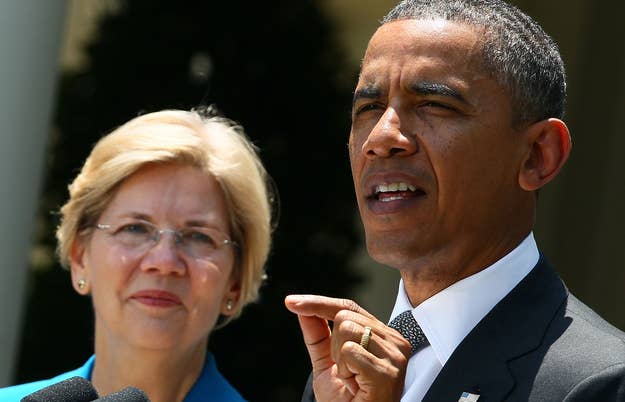
Indeed, November 6 was not just a great night for the president; the liberal wing of the Democratic Party also scored impressive victories, sweeping Elizabeth Warren into the senate, Sherrod Brown to a significant reelection, and even Alan Grayson back to Congress.
This sets up, of course, Democrats’ own version of intra-party chaos, and it goes far beyond the typical grumbling and chest-thumping about Obama’s negotiating skills or scoring political points. This is about bedrock principles. “Soul of the party” kind of stuff.
There are many ways to define and differentiate Democrats, but one critical way is on economic issues. On the one hand are the economic liberals, who believe in a government that protects those who need protecting and promises a social contract encouraging shared prosperity. This entails an ironclad commitment to earned benefits and social insurance programs, even if that might require increased tax revenues from the top income margins.
When it comes to these kinds of issues, liberals appear charged and ready to battle. In addition to folks like Warren recently gaining prominence, large droves of House Democrats recently took the somewhat unusual move of coming out against the president’s chained CPI proposal (although they did vote en masse for last night’s measure, despite being less than enthusiastic). Leaders like Ohio’s Brown have organized petitions against cuts to Social Security and Medicare. And liberal groups have promised primaries against members supporting cuts like these.
On the other side are what might be called the SPECs, or Socially Progressive Economic Conservatives. These are the party members and leaders focused more on issues like reproductive health or marriage equality, and less guided by economic fairness credos like protecting the poor, elderly, and sick. Some may even pride themselves on austerity, by capping property taxes while cutting public services, facing down unions representing working class Americans, and promoting what they call “pro-business” or “pro-growth” agendas.
Just as Republicans are now undergoing their own noisy, awkwardly public process to figure out what they stand for, Democrats may soon find out which part of their party prevails on economic issues. The answer could have serious ramifications regarding the kind of support many Americans receive from their government during a historic recession. And who the Democratic party selects to lead it, a few years down the road.
But before that happens, the next month or two may give way to a passionate debate that makes the internal strife the Republicans now face a bipartisan Washington phenomenon.