Do Female CEOs Mean Family-Friendly Workplaces?

We don’t know, because companies don’t necessarily make their family leave benefits (or lack thereof) public. Why more data on family-friendly policies would be good for everyone.

I know, right? Now tell your friends!
Do Female CEOs Mean Family-Friendly Workpl...
Anna North

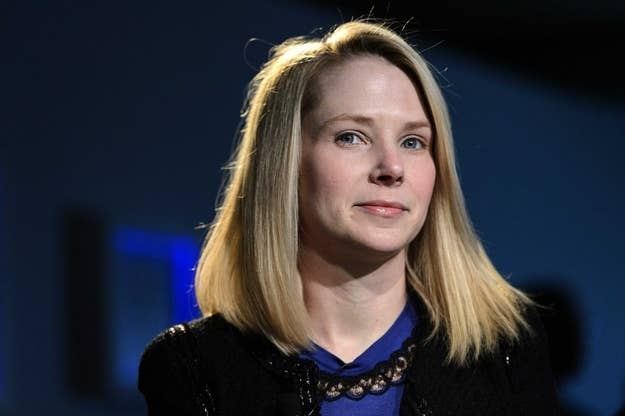
Marissa Mayer in January. Image by Keystone, Laurent Gillieron / AP

By eliminating Yahoo’s work-from-home policy this week, Marissa Mayer has set off a debate over whether having women in leadership roles makes workplaces better for the women below them.

For all the debate — over whether female executives help narrow the wage gap or whether they create more family-friendly workplaces — few answers exist, since real information on the issue is strikingly hard to come by. Regardless of what it ends up showing, more public data about parental leave and other work-life policies at companies would be good for American workers.

There are few, but not many, studies on the topic in corporate environments. One study in Sweden found that, at least as of 2008, female managers didn’t have an effect on the wage gap — women weren’t more likely than men to pay their male and female employees equally. However, only 36% of managers in the study were female — still outnumbered by men, it’s possible that they didn’t feel able to challenge the status quo. Another study [PDF] conducted in the US using 2000 census data found that women tended to earn more when their industries (not just their companies) had more female managers, and that the effect was much stronger when these managers held high-status positions.

When it comes to whether female CEOs and other high-level managers affect maternity leave and other work-life balance issues (including ability to work from home), the data is especially lacking. A representative for Catalyst, a research firm specifically dedicated to advocating for women in business, said the group has never studied this question. Academic research on the issue appears similarly thin — Steven Wisensale, a professor of family studies and author of Family Leave Policy: The Political Economy of Work and Family in America, said he was unaware of any broad-based research on whether female CEOs affect leave.

Getting information about work-life policies is difficult, which may explain why information is so lacking in this area. Maternity leave and other company benefits aren’t always publicly available. The New York Times is studying parental leave policies at tech companies in the wake of Mayer’s announcement, but hasn’t yet heard back from Yahoo. Some companies voluntarily complete a questionnaire on such policies for Working Mother magazine’s yearly list of 100 most family-friendly companies — interestingly, in 2012, HP and IBM, America’s two largest companies with female CEOs by revenue made this list.

Though still not particularly thorough, government research offers more insight. Several studies have found that female legislators are more likely than male ones to prioritize legislation concerning women’s rights or family issues. States with two female senators are also likely to have more female legislators at lower levels, but it’s not clear whether this is because of the influence of the senators or because of demographic factors.

Without more data on work-life policies, it’s hard to tell whether women in positions of corporate power have a real positive effect. Perhaps more troublingly, it’s also hard for workers to know what’s available elsewhere or to find out how their employers compare. And if data on such policies were public, companies might have an incentive to do better. If employers actually faced a PR nightmare for coming up short on parental leave, they might get a lot more family-friendly.

Check out more articles on BuzzFeed.com!

More ▾

Facebook Conversations


    2 Responses So Far

    • amandar42   Do Female CEOs Mean Family-Friendly W...  about 2 months ago
    • williamquincyb 2 months ago

      My research led to this conclusion about Ms. Mayer: The issue is NOT about working from home. Insiders at Yahoo have said this needed doing. The company had become “fat and lazy” with a bloated infrastructure. People were abusing telecommuting and some were just not showing up at all. And a company still has the right to ask its employees to show up for work, right? Sarah Kessler of Fast Company Magazine: “Mayer’s decisions have been consistently discussed not on the basis of whether they are appropriate for a CEO, but whether they offend her role as a representative for working women everywhere.”  Bonnie Fuller, President & Editor-in-Chief, HollywoodLife: “Instead of insulting Mayer by saying she’s “superhuman,” and not a “realistic” role model, and criticizing her for paying for a nursery at her own expense, we SHOULD be applauding her. She is one of only 42 female CEOs in the Fortune 1,000 biggest revenue companies. Did you get that — 42 out of 1,000?”  Debbie Madden, Executive Vice President, Cyrus Innovation: “I agree with Mayer. Why? Because this debate is not about individual productivity; it is about company productivity. There is little room for argument that in today’s world an employee can be productive from virtually anywhere and at any time, but a company is not merely the sum of its parts. And collaboration is key to fostering innovation.”  This story isn’t about telecommuting. It is about a CEO who has been given the mandate to run a company in the best manner possible. If the CEO was a man, would we be talking about this? Patrick Pichette, Google’s chief financial officer: “The surprising question we get is: ‘How many people telecommute at Google?’ And our answer is: ‘As few as possible.’ There is something magical about spending the time together.”  Maybe, just maybe, people should be judging Marissa Mayer as CEO. That may turn out to be her biggest success as a woman. my $0.02: Marissa Mayer: Has the smoke cleared yet?

    • TyrellCorp 2 months ago

      To be successful in a corporation, you have to follow its rules. This means treating other people as either a tool to be used (and discarded when no longer useful) or an obstacle. It forces people to be sociopaths, and the people that are best at that game either start out as sociopaths or become that way in response to operant conditioning. A recent study in Europe compared the responses of imprisoned sociopaths with those of corporate CEOs and found them to be surprisingly similar. While there are fewer female sociopaths than male, there are definitely some. The pair that recently ran for Senator (Carly Fiorina) and Governor (Meg Whitman) of CA come to mind — both CEOs, the former an epic failure and the latter well on her way.

    • Jake Levy thinks Do Female CEOs Mean Family-Friendly W... is Win  about 2 months ago